Project-specific engineering. Worldwide support.
+90 312 354 33 94EN · English

Offset slipform pavers

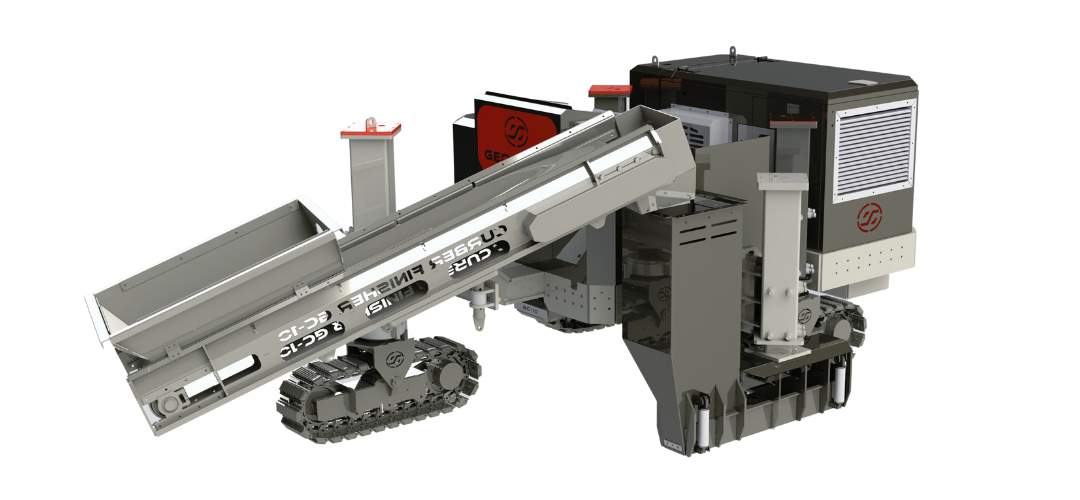
GC 10

Flexible mould configurations for curbs, barriers and roadside structures.

GC10 - OFFSET SLIPFORM PAVER

Machine data

Technical specifications

Published data, clearly organised for quick comparison and project planning.

Max. mould width
1000 mm
Max. mould height
500 mm
Rated power
45.5 kW / 61 HP
Operating weight, CE
5400 kg
View complete specification table 12 parameters
GC10 - OFFSET SLIPFORM PAVER — complete published specifications
Exhaust emissions categoryEU Stage 3 / US Tier 3
Number of track units3
Operating weight, CE5400 kg
Displacement4 I
Hydraulic height adjustment400 mm
Max. working speed10 m/min.
Max. travel speed15 m/min.
Max. mould width1000 mm
Max. mould height500 mm
Height adjustment, mechanical150 mm
Rated power45.5 kW / 61 HP
Lateral adjustment of mould400 mm

Specifications refer to the published machine information. Confirm the configuration required for your project with our team.

Engineering & operation

Built around the application.

Machine features and operating principles from the complete product content.

01

A streamlined offset slipform paver designed for creating uniform structures and slim walkways and curbers.

  • The practical slipform paver is capable of laying various monolithic profiles up to a height of 0.5 meters..
  • The convenient slipform paver is capable of easily laying concrete surfaces up to a width of 1 meters.
  • The slipform paver is well-suited for construction sites that demand excellent maneuverability, tight turning capabilities, and maximum adaptability. Thus, it provides convenience when paving concrete on narrow roads and bends.
  • The position of the front track makes it easier to approach narrow roads and also ensures perfect concrete paving.
02

Where to use?

  • Sidewalks
  • Cable Ducts
  • Parking Lots
  • Borders in Various Sizes
03

Sensors

  • Thanks to the sensitive sensors of the GC-10, it tolerates ground irregularities by constantly adjusting the paver's elevation, direction and inclination. It maintains the laying quality and smoothness.
04

Advanced Conveyor

  • The conveyor can move up-down and left-right. It can also get longer and shorter. In this way, concrete feeding process can be done from anywhere.
05

Special Production Vibrators

  • Specially produced high-performance hydraulic concrete vibrators keep the vibration at the highest level, distribute the concrete homogeneously and bring the surface to perfection.
06

Hydraulic Design

  • Hydraulic Circuits pilot pump auxiliary pilot pumps directional valves Hydraulic Hoses and pipeline and electronic control-hydraulic system are professionally selected with the most powerful and reliable brand names. Geometry, with its ultimate experience, formulated the hydraulic design. It has introduced machines that implement the needs of a wide range of customer projects regarding system design to strengthen.
07

Cooling System

  • Reinforced special cooling system designed to meet all needs, extreme loads and continuous operational demands in the most demanding conditions of high temperature environment operating scope and environment. This special design protects all relevant components against wear out in different operational environments and guarantees the extreme performance of the curber.
08

Why curbs are made?

Curbs are used to separate sidewalks and medians from the road, especially in the construction industry. These structural elements help to direct rainwater from the road surface towards the infrastructure, thus preventing puddling on the roads and allowing water to flow in an orderly manner. Usually made of durable materials such as concrete or granite, curbs are important for both infrastructural functionality and aesthetics.

09

Benefits of roadside kerbs

Roadside kerbs are an important part of urban planning and have many benefits. Firstly, curbs improve safety by separating pedestrian and vehicular traffic. They also play a critical role in diverting rainwater, preventing it from accumulating on the roads and improving driving conditions. Curbs also mark the transition between pavement and road, providing a safer walking space, especially for the visually impaired. Curbs also contribute to aesthetics and make the cityscape look organized and attractive. Finally, curbs help to protect infrastructure systems, helping to remove materials and debris that can damage water drainage channels. Curbs are therefore indispensable not only for traffic safety and water management, but also for urban aesthetics and infrastructure protection.
WhatsApp